
3D Printer Filament FAQs
What is the best 3D printer filament for beginners?
PLA and PLA+ are the best filaments for beginners. They print at low temperatures (190-220°C), don't require a heated bed, and are easy to work with. PLA+ offers improved strength and flexibility over standard PLA, making it ideal for functional prints.
What's the difference between PLA and PLA+?
PLA+ is an enhanced formulation with improved layer adhesion, higher impact resistance, and better flexibility compared to standard PLA. It prints at similar temperatures (190-220°C) but produces stronger, more durable parts with less brittleness.
Which filament is best for high-temperature functional parts?
For high-temperature applications, we recommend Nylon, ABS, or PETG. Nylon offers the highest heat resistance (up to 80°C continuous use) and mechanical strength. ABS provides good heat resistance (up to 70°C) with easier printing. PETG is a good middle ground with heat resistance up to 65°C.
Do Silk filaments require post-processing?
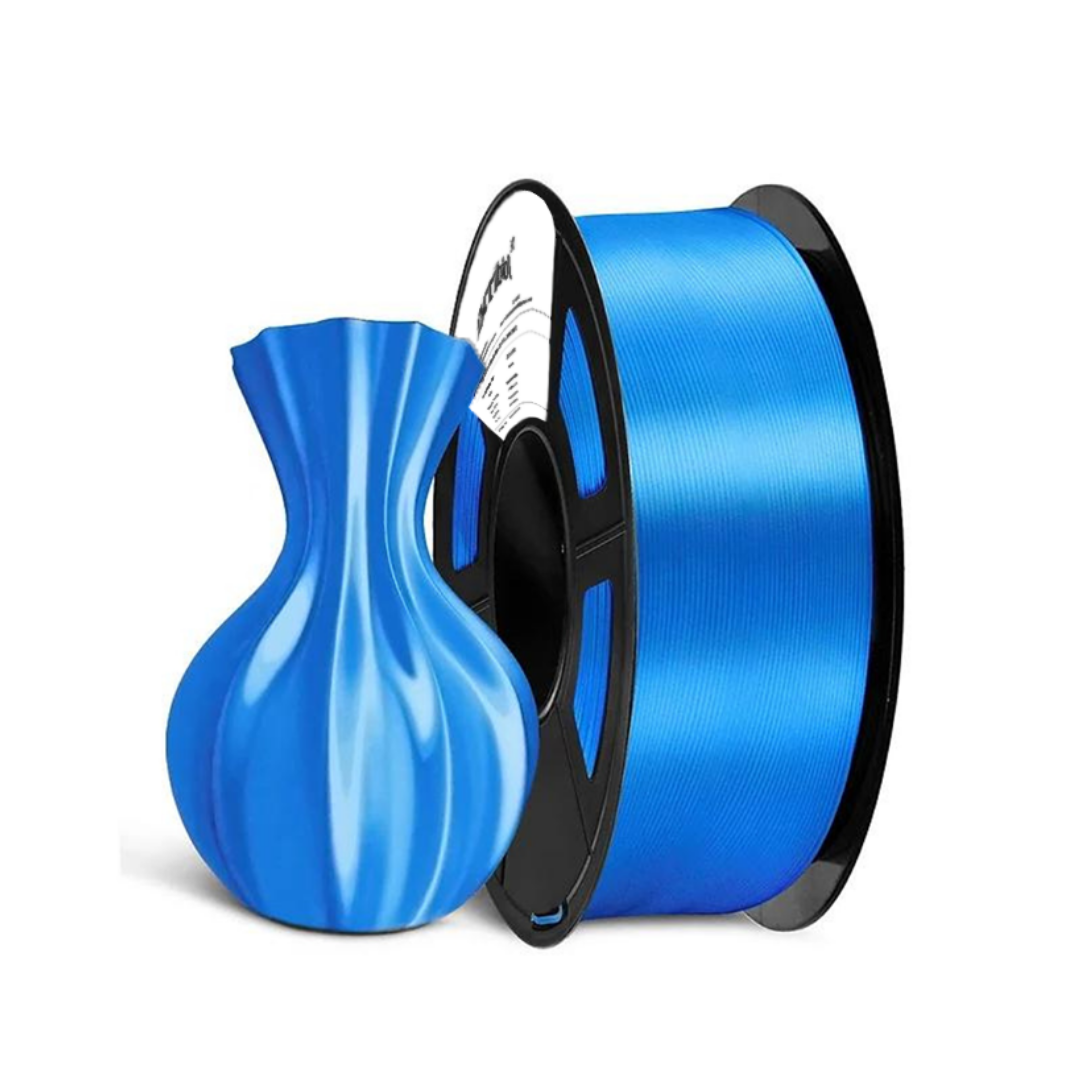
No. Scribbl3D Silk filaments feature an enhanced formulation that produces a glossy metallic finish directly off the print bed, minimizing visible layer lines without any post-processing. The silk finish is achieved through the filament's unique composition.
What diameter filament should I buy - 1.75mm or 2.85mm?
Most consumer 3D printers use 1.75mm diameter filament. Check your printer's specifications before purchasing. 1.75mm is more common and offers faster flow rates, while 2.85mm (sometimes called 3mm) is used in some professional and older printer models.
